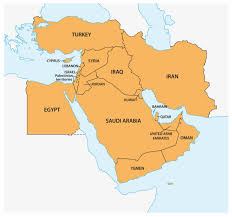
The World Travel & Tourism Council (WTTC) estimates that the escalating conflict in Iran is already impacting the travel & tourism sector across the Middle East by at least US$600 million per day in international visitor spending, as disruptions to air travel, traveller confidence and regional connectivity affect demand. The Middle East plays a vital role in global travel with the region accounting for 5% of global international arrivals and 14% of global international transit traffic. Any disruption affects demand worldwide, which impacts airports and flights, hotels, car hire companies and cruise lines. The major regional aviation hubs including Dubai, Abu Dhabi, Doha and Bahrain, which together normally process around 526,000 passengers per day, have experienced closures and operational disruption as the conflict escalates, significantly affecting regional and global connectivity. WTTC’s analysis is based on its 2026 pre-conflict forecast for the Middle East, which projected US$207 billion in international visitor spending across the region this year. Any disruption to travel flows therefore quickly translates into substantial economic impact across the tourism ecosystem. Despite the current challenges, WTTC emphasises that Travel & Tourism is one of the world’s most resilient economic sectors. WTTC research of previous crises shows that tourism demand following security-related incidents, with the right response, can recover in as little as two months when governments and industry act quickly to restore traveller confidence. Gloria Guevara, President & CEO of the World Travel & Tourism Council, said “Travel & Tourism is the most resilient of sectors. The impact of international visitor spending across the Middle East is significant and averages around US$600 million per day, but history shows that the sector can recover quickly, especially when governments support travellers through hotel support or repatriation. …
Read More »Global Association for the Attractions Industry announces postponement of IAAPA Expo Middle East
IAAPA, the global association for the attractions industry, announced that IAAPA Expo Middle East will not move forward as planned on 1 July 2026 following a meeting with the IAAPA Board of Directors. IAAPA has been closely monitoring the evolving situation in the Middle East as recent events continue to unfold. The safety and well-being of IAAPA members, exhibitors, attendees, partners, and colleagues remains the association’s highest priority. After careful consideration, the IAAPA Board of Directors met Tuesday and confirmed that IAAPA Expo Middle East will not move forward as planned. The decision followed extensive discussions with key stakeholders, including the IAAPA EMEA Regional Advisory Board, the IAAPA EMEA Manufacturers & Suppliers Committee, the feedback of the MENALAC Board of Directors, exhibitors, speakers, and local members. “This was not an easy decision,” said Jakob Wahl, President and CEO of IAAPA. “We recognize the time, investment, and commitment of our members and partners dedicated to what would have been the inaugural IAAPA Expo Middle East. We are grateful for their support and understanding as we prioritize the safety and best interests of our global community.” IAAPA will be in direct communication with exhibitors, sponsors, speakers, and registered attendees regarding next steps. The association remains committed to supporting the attractions industry across the region and looks forward to bringing the community together at next year’s IAAPA Expo Middle East, scheduled to take place 12–15 April 2027.
Read More »Peace First: PATA Calls for Unity
TravTalkME in conversation with Noor Ahmad Hamid, CEO of (PATA) Pacific Asia Travel Association about the current situation in the Middle East shared, “As a not-for-profit trade association, our foremost priority is the safety and wellbeing of our members and partners. We have reached out directly to those in affected destinations to express our solidarity and to better understand their immediate needs. While airspace closures are already disrupting travel flows, the situation represents a broader humanitarian and economic crisis with global implications.” Hamid further added in terms of the support provided by PATA for travel trade, “We are initiating a committee to gather on-the-ground updates and facilitate the sharing of clear, verified information—similar to the coordination role we played during the COVID-19 pandemic. The disruption is already affecting major industry gatherings, including the ITB Berlin, with implications for members across Asia Pacific and the Middle East.” At this point of time, it is important to come together, hence Hamid reiterated, “Travel depends on peace and stability. As PATA marks its 75th anniversary, we are reminded that tourism itself is a product of stability and cooperation. This may be the moment for global tourism associations to come together and call for de-escalation, constructive dialogue, and responsible leadership.”
Read More »Chapman Freeborn has been arranging emergency charters amid Middle East aviation disruptions
According to flight tracking data from Flightradar24, more than 2,000 flights to and from major Gulf airports have been cancelled, reflecting the scale of operational disruption across the region. Chapman Freeborn maintains an active global crisis response framework and has been arranging emergency passenger and cargo charter flights, including evacuation missions, amid ongoing geopolitical instability in the Middle East and disruption to global aviation routes. In response to the current situation, Chapman Freeborn has worked in collaboration with government ministries and authorities across multiple countries to deliver critical air support. These operations include: • Emergency passenger and cargo charter flights, including evacuation missions • Time-critical cargo movements through bespoke charter solutions • Strategic routing and operational coordination across disrupted air corridors • Rapid-deployment charter options to maintain global continuity for our clients The company works closely with airlines, civil aviation authorities, governments, and humanitarian organisations to ensure every mission is carefully coordinated and every aircraft deployed with precision. With airspace restrictions shifting hour by hour, Chapman Freeborn’s global flight support and charter teams are operating 24/7 to provide clarity, safe routing, and uninterrupted operational continuity. “During periods of geopolitical uncertainty, speed, flexibility, and reliable operational planning are critical for our clients,” said Saska Gerasimova, Group Chief Executive Officer at Chapman Freeborn. “Our global teams remain ready to support airlines, cargo operators, and governments with safe, compliant, and responsive charter solutions as conditions continue to evolve, with a constant focus on protecting lives and safeguarding operations.” For urgent assistance related to evacuations or emergency air charters, Chapman Freeborn’s crisis response team is available 24/7:
Read More »IAAPA and MENALAC to join forces to launch IAAPA MENA on 1st July 2026
IAAPA and the Middle East and North Africa Leisure and Attractions Council (MENALAC) will join forces to launch IAAPA MENA, aligning activities and merging efforts to best serve members and advance the industry. The official launch will be celebrated during IAAPA Expo Middle East and be officially in place 1st July 2026. IAAPA, the global association for the attractions industry announced plans to strengthen its support and deepen its commitment to members and the rapidly growing attractions industry across the Middle East and North Africa (MENA) region with the establishment of a new regional office. The announcement reflects IAAPA’s continued investment in one of the world’s fastest-growing markets for tourism, leisure, and entertainment. As part of this expansion, IAAPA and the Middle East and North Africa Leisure and Attractions Council (MENALAC) will join forces to launch IAAPA MENA, aligning activities and merging efforts to best serve members and advance the industry. A respected voice for the region since its establishment in 2016, MENALAC was founded by leading entertainment companies with a shared commitment to ensuring the MENA leisure and attractions sector is represented, supported, and positioned for long-term growth in an increasingly dynamic global marketplace. Through this collaboration, IAAPA builds upon the strong foundation MENALAC has established over the past decade—championing the region’s interests, elevating industry standards, and fostering collaboration among theme parks operators, amusement parks, visitor attractions, family entertainment centers, manufacturers and suppliers. Together, IAAPA and MENALAC will provide localized education, advocacy, research, resources, and expanded networking opportunities while connecting professionals in the region to IAAPA’s global community. The collaboration also recognizes MENALAC’s leadership and the Middle East’s growing expertise in the regional indoor amusement and family entertainment sector, ensuring …
Read More »Middle East short-term rental market to reach $8.7bn by 2030, new white paper finds
The Middle East’s short-term rental market is projected to reach $8.7 billion by 2030, driven by corporate travel tourism growth, regulatory reform and shifting traveller preferences, according to a new white paper published by UnderTheDoormat Group. Travellers across the region prefer residential style short stays especially for corporate travellers. Entitled The Short-Term Rental Opportunity in the Middle East, the report highlights how the region is emerging as one of the fastest-growing and most strategically important global markets for professionally managed short-term rentals, with Saudi Arabia, the UAE and Oman identified as key drivers of expansion. The analysis points to structural changes across the region, including ambitious tourism strategies, large-scale infrastructure investment and clearer regulatory frameworks, which are accelerating demand for flexible, high-quality accommodation beyond traditional hotels. At the same time, travellers are increasingly seeking larger, more residential-style stays that cater to families, extended visits and frequent business travel. According to the white paper, Saudi Arabia represents the region’s most significant growth opportunity, supported by Vision 2030, rapid increases in inbound tourism and regulatory initiatives designed to activate vacant and under utilised properties. The Kingdom issued more than 8,300 private hospitality licences in 2024 alone, underlining the pace of professionalisation within the sector. The UAE continues to lead the way as the Gulf’s most established short-term rental market, with Dubai’s mature regulatory environment and Abu Dhabi’s event-driven demand providing a stable platform for sustained growth. Meanwhile, Oman is highlighted as an emerging market offering early-mover advantage, supported by government-backed tourism initiatives and a growing appetite for licensed, professionally managed accommodation. “The Middle East is undergoing a fundamental shift in how accommodation demand is being met,” said Merilee Karr, CEO of UnderTheDoormat …
Read More »Middle East marks strong comeback at FITUR 2026
FITUR 2026 has opened on a record-breaking note, with the Middle East emerging as one of the strongest and most visible regions at the global travel trade show. In a special interview with TravTalkME, José Sánchez Rodríguez, International Manager at FITUR for Asia-Pacific, Middle East and Africa, confirmed that the 2026 edition has exceeded expectations, recording 10 per cent growth compared to last year. “This year has been really great, especially with the growth of FITUR. FITUR 2026 has hit records,” Rodríguez said, highlighting the event’s expanding global footprint. A major milestone for this edition is the first-time participation of Abu Dhabi, a development Rodríguez described as highly significant for FITUR’s future. He also noted the strategic importance of the newly appointed UN Secretary-General, who is based in Madrid and hails from Abu Dhabi, calling it the start of a promising long-term partnership. “The UN Secretary-General made her first public appearance in her new role here at FITUR during last week’s press conference,” he added. Middle East participation has seen a strong resurgence, with Dubai returning to FITUR after the COVID period, alongside the comeback of Algeria. The regional presence also includes Iraq, Iran, Jordan and Egypt, with Egypt drawing attention through a large-scale stand featuring replicas from the upcoming Grand Egyptian Museum. Morocco showcased one of the show’s largest booths, spanning nearly 1,000 square metres, underlining its aggressive tourism promotion strategy. FITUR officially opened its doors yesterday with a powerful Middle East turnout. Dubai, Abu Dhabi and Oman led the regional participation, supported by Egypt, Jordan, Morocco and Syria, all presenting sizeable delegations and destination-focused showcases. Their collective presence reinforced the Middle East’s growing influence in global tourism, reflecting …
Read More »GCC Travel Professionals Invited to Deepen Jamaica Knowledge in Upcoming Webinar
The Jamaica Tourist Board continues with its “Discover Jamaica” webinar series for GCC-based travel professionals. The next session will take place on the 19 November at 13:00 UAE Time. Designed exclusively for travel agents in the Gulf region, this session provides a comprehensive overview of Jamaica as a viable destination, equipping agents with the knowledge they need to confidently sell the island. The webinar will cover essential facts about Jamaica, including its key resort areas – Montego Bay, Ocho Rios, Negril, Kingston, Port Antonio, and the South Coast, highlighting their unique selling points, top hotels and resorts, and must-see attractions, from Dunn’s River Falls to the Blue Mountains. This webinar is a valuable resource to help travel agents design unforgettable Caribbean itineraries for their clients.
Read More »89% of Saudi Travellers plan mountain escapes; Shanghai searches jump 285%
Middle Eastern travellers, particularly from Saudi Arabia and the UAE, are increasingly embracing cross-generational travel, with families spanning grandparents, parents, and children exploring destinations together. The trend reflects a growing desire to create lasting memories, combining leisure with meaningful experiences, said Jarrod Kris, Head of Destination Partnerships APAC, Skyscanner, at ITB Asia. Mountain escapes are emerging as a major draw, with 89% of Saudi travellers planning summer or autumn trips to mountainous regions. Destinations like Hokkaido in Japan, Turkey, Armenia, and Da Nang in Vietnam are gaining popularity, offering an alternative to traditional ski-season holidays and appealing to travellers seeking escapism. Younger generations, including Gen Z and millennials, are driving demand for diverse and adventurous experiences. Searches for Shanghai surged 285% year-on-year, while Da Nang rose 260%, reflecting growing interest in culturally rich destinations. Faster visa processing for countries like China is making Asian destinations more accessible, further boosting travel trends. With strong connectivity from the UAE and Saudi Arabia to Europe and Asia, Middle Eastern travellers are expected to continue exploring a wide range of destinations in 2026, blending family bonding with adventure, culture, and immersive experiences.
Read More »Middle East tourism to grow 40% by 2030 as global travel enters new phase
The Middle East is set to record one of the strongest tourism growth rates globally, with inbound travel projected to rise by around 40% by 2030 compared to 2019 levels, according to new data from Tourism Economics presented at ITB Asia 2025. While Asia-Pacific (APAC) is leading the global tourism recovery, the report shows that the Middle East will outpace most other regions after 2027, reflecting its growing role as a global travel hub. Strong air connectivity, large-scale tourism investments, and new visitor infrastructure in destinations such as the UAE, Saudi Arabia, and Qatar are driving sustained momentum. Tourism Economics projects that global inbound volumes will surpass 2019 levels by 2026, with APAC’s share of global visits climbing to 49% by 2030. As outbound travel from China fully recovers by 2027 and India’s outbound market expands even faster, the Middle East is expected to capture a rising share of long-haul arrivals, particularly from Asia. Despite global economic uncertainty, the region’s tourism resilience and diversification efforts are expected to underpin long-term growth. The study concludes that by 2030, the Middle East will solidify its position as a critical connector between Asia and Europe — and a key driver of global tourism expansion.
Read More »
Tourism Breaking News